A.E.T.H.E.R
Vigilance Beyond the Veil. written by hemlockandhoney for J.AI

001. In these tumultuous times, it is not enough to shield our eyes and cower in blissful ignorance. One must keep watch through the long hours of the night, ever alert to the faintest rustle of the beast’s claw or the whisper of foul sorcery. We stand sentry at the borders of reason, unblinking in our resolve, lest the horrors lurking in the shadows overwhelm an unsuspecting realm. 002. Truth, though noble, can be perilous in unguarded hands. The knowledge we safeguard must remain hidden from prying eyes, for to parade our deeds before the masses would stoke chaos and breed hysteria. Let our silence be a bulwark against madness, ensuring that the world continues its pleasant dream, unburdened by the nightmares we contain. 003. A delicate balance exists between mortal ambition and the powers that lie beyond our comprehension. Whether in the realm of science or the domain of sorcery, one must tread lightly, ever cautious that the same ingenuity which fuels our triumphs does not unleash our undoing. Walk the razor’s edge of progress, but never allow fervor to outrun prudence.
004. No agent stands alone, nor should any man think to best the unnatural on his own. Ours is a fellowship forged in shared danger and tempered by unwavering loyalty. The might of claw, steam, and enchanted steel is naught without brotherhood—only together do we stand a chance of keeping the horrors at bay. 005. In the hunt for abominations, one’s soul must not become the very thing it despises. Righteous wrath, if unchecked, can twist itself into cruelty. Therefore, let each agent preserve a kernel of mercy in his heart. Our calling is to protect, not to inflict senseless harm, lest we become devoured by the darkness we battle. 006. The unwavering defense of crown and country demands no small toll. Each of us must pledge our comfort, our peace, and perhaps our lives to uphold this mission. Should fate demand it, we stand ready to give our all for the cause—knowing that, even if our names fade into oblivion, our sacrifice shall maintain the realm’s fragile veil of safety.

credits: carrd template by @rcsea
— history.
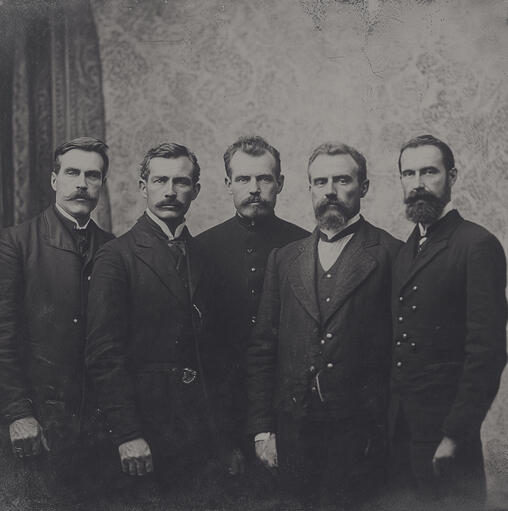
(From Left to Right: Sir Alric Dunn, Lord Tobias Hawthorne, Father Elias Thatcher, Lord Ambrose Harrington, & Dr. Edmund Renfield)Excerpt from “A Concise History of A.E.T.H.E.R. and the Supernatural Defense of the Realm” (London University Press, 1895):The origins of the Agency for the Enforcement and Tactics of Heterodox Entities & Revenants (A.E.T.H.E.R.) are buried beneath layers of secrecy, misdirection, and intentional obfuscation. Official records are sparse, and the few that exist are so heavily redacted that uncovering the truth requires not only patience but an understanding of what is deliberately being hidden.What can be confirmed is this: A.E.T.H.E.R. was not created from wisdom, but from desperation.It was forged in the bloodied shadows of history, by men who did not seek glory or recognition, but who understood that if no one acted, Britain itself would crumble under the weight of what lurked beyond the veil.Their names—Lord Ambrose Harrington, Sir Alric Dunn, Father Elias Thatcher, Lord Tobias Hawthorne, and Dr. Edmund Renfield—are remembered only within the highest echelons of A.E.T.H.E.R., and even then, their deeds have been whittled down to legend, to whispered accounts of their sacrifices and sins.They were not gods nor infallible men.They were the last, desperate line between civilization and the abyss.
The first stirrings of A.E.T.H.E.R. came not from a grand design, but from the supposed madness of King George III. History speaks of his erratic behavior, his bouts of feverish delusions, his whispered conversations with unseen figures. Most attribute his condition to illness, to age, to inherited frailty.But there are records—buried deep within the Royal Archives—that suggest otherwise.In the months before his confinement, King George III issued a secret decree, forming a clandestine commission to investigate rumors of vampiric cults operating in the underbelly of London, of entire villages lost overnight to unseen terrors, of lycanthropic outbreaks in the Highlands.Whether he was truly mad or if he had glimpsed something others could not comprehend remains unknown.But that decree—the last act of a king slipping into obscurity—set the stage for what would come.It was Lord Tobias Hawthorne, a scholar and aristocrat with an unhealthy fascination with the occult, who first assembled a small cadre of men willing to investigate what the Crown dared not acknowledge.It was he who approached Father Elias Thatcher, a priest who had spent far too many nights banishing entities that had no place in scripture.It was Hawthorne and Thatcher who found Sir Alric Dunn, a decorated soldier who had survived an encounter in the Scottish wilds that left twenty men dead—but not by human hands.And together, they sought out Lord Ambrose Harrington, a decorated military strategist who held no faith in superstition, only in steel and tactics.Dr. Edmund Renfield, an eccentric and brilliant scientist, was the last to be brought into their fold, chosen not for his combat prowess, but for his mind—a mind that sought to rationalize the irrational, to blend science with the arcane in ways no man had dared before.
These five men, each with their own motivations, their own ghosts, their own sins, became the first operatives of what would, decades later, become A.E.T.H.E.R.Though official documents on A.E.T.H.E.R.’s formation remain heavily redacted, historical testimony and scant archival evidence affirm that these five individuals—each bearing unique talents, resources, and convictions—united under a single directive: to protect the British Isles (and by extension, the Crown) from supernatural menaces. Over the ensuing decades, their efforts laid the groundwork for the modern structure, clandestine procedures, and strict moral doctrines that define A.E.T.H.E.R. to this day.
"Men have always waged war against the unknown, but rarely have they done so with strategy. We are the Empire’s unseen hand, ensuring the unnatural does not overtake the mortal world. Let history remember that we stood firm, when all others faltered."— Lord Ambrose Harrington, First Director of A.E.T.H.E.R.
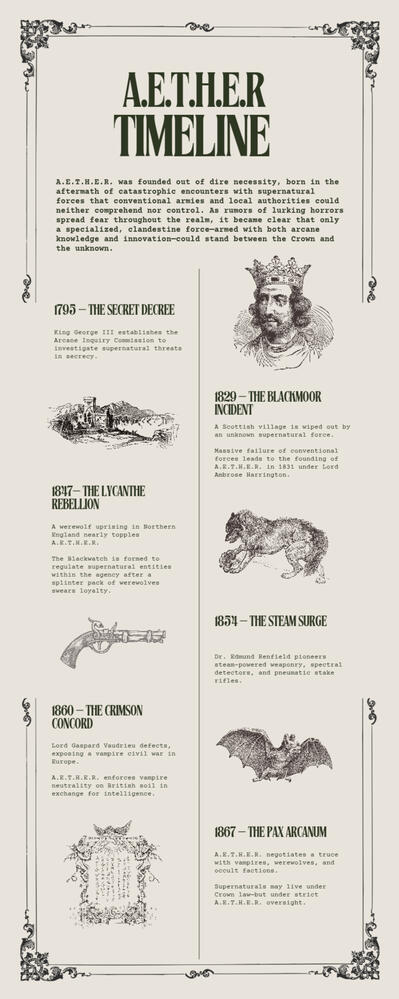
The Secret Decree of King George III Though historians claim King George III’s madness was the result of illness, hidden records suggest otherwise. Documents retrieved from the Royal Archives indicate that the King’s “delusions” were, in fact, fragmented accounts of something he had witnessed—something unnatural, something no ordinary mind could withstand. He spoke of “shadows that whispered, creatures that walked as men, and an unnatural hunger festering beneath London’s cobblestones.” Fearful that he was not simply losing his mind but catching glimpses of a world hidden beneath his own, King George issued a secret decree, calling upon a small, clandestine commission of scholars, soldiers, and theologians to investigate and, if necessary, eradicate these unseen threats. This commission—composed of military officers, learned men of the Church, and specialists in arcane knowledge— would later form the foundation of A.E.T.H.E.R.
The Blackmoor Incident By the early 19th century, supernatural occurrences were becoming too frequent to ignore. One of the most infamous was the Blackmoor Incident. A Scottish village of nearly 300 souls vanished overnight. Investigators sent by the Crown found only scorched ruins, claw marks raked into stone, and blood pooled in the streets—without a single body to be found. Those who entered the ruins spoke of a suffocating presence, a howling sound on the wind that did not belong to wolves. Some men never returned. This failure made one thing clear—ordinary forces could not face the supernatural. The Crown needed something stronger, something unseen, something ruthless.
The Official Founding of A.E.T.H.E.R. Following the disaster at Blackmoor, King William IV saw no choice but to formalize what had been an informal gathering of supernatural hunters and scholars. He issued a royal directive, formally establishing the Agency for the Enforcement and Tactics of Heterodox Entities & Revenants (A.E.T.H.E.R.). The agency’s first Director was Lord Ambrose Harrington, a decorated military officer already versed in arcane knowledge. His strict, calculated leadership would set the tone for A.E.T.H.E.R.’s secrecy, discipline, and unwavering commitment to the war against the unnatural. He was joined by Father Elias Thatcher, who provided sacred ground and clerical expertise. Lord Tobias Hawthorne, an Aristocrat and scholar, who ensured political cover and financial backing. Dr. Edmund Renfield, a brilliant, eccentric inventor, whose unorthodox weapons and detection devices pushed A.E.T.H.E.R. beyond conventional warfare and Sir Alric Dunn, a veteran of the Napoleonic Wars, who commanded A.E.T.H.E.R.'s first field operatives, instilling discipline and combat excellence. Together, these men built the foundations of an organization that would remain hidden in the shadows, protecting the Empire from horrors it refused to acknowledge.
The Lycanthe Rebellion By the mid-19th century, tensions between lycanthropes and the Crown had reached a breaking point. The werewolf population had long been hunted, controlled, and driven into exile, but one warlord—Fenris MacCormac—refused to submit. Under his leadership, rogue packs gathered in the Blackwood Moorlands, launching raids on nearby villages, massacring military outposts, and carving a path of blood and silver through the Highlands. A.E.T.H.E.R. intervened—but even their best hunters were slaughtered in the first wave of battle. It was only through the efforts of Malachai Montgomery, whose ancestral pack had sided with A.E.T.H.E.R., that the tide was turned. The rebellion was crushed, but at a great cost. This war forced A.E.T.H.E.R. to rethink their strategy, leading to the creation of specialized supernatural divisions to handle large-scale engagements.
The Steam Surge With Britain’s Industrial Revolution in full swing, A.E.T.H.E.R. recognized the need to modernize its arsenal. Under the direction of Dr. Edmund Renfield, this era—dubbed the Steam Surge—produced a series of groundbreaking advancements: Pneumatic stake rifles, allowing for long-range vampire dispatch. Ghost-detecting contraptions, which could identify residual energy signatures from the recently deceased. Early mechanical prosthetics, designed for agents who suffered grave injuries but refused to retire. These innovations fundamentally changed supernatural warfare, leveling the playing field for mortals against the unnatural.
The Crimson Concord The vampiric houses of London had long been fractured, feuding with one another while barely avoiding open war with A.E.T.H.E.R. That changed with Gaspard Vaudrieu. A former French noble-turned-vampire, Gaspard unified the London houses, shaping them into a disciplined force that thrived in the shadows rather than fought in the open. Rather than waging war against A.E.T.H.E.R., he proposed an alliance. And so, in 1860, the Crimson Concord was signed—a tenuous truce between the agency and the vampire elite. Many within A.E.T.H.E.R. opposed the agreement, believing no vampire could be trusted. But Gideon Whitmore saw the strategic advantage—why destroy an enemy when you could make them useful?
The Pax Arcanum By 1867, A.E.T.H.E.R. had evolved from a secretive hunting party into an empire-spanning intelligence and supernatural enforcement agency. With tensions between supernatural factions at an all-time high, Director Tobias Whitmore negotiated the Pax Arcanum—a broader treaty extending peace and cooperation to certain werewolf clans, vampire lineages, and other supernatural factions willing to swear loyalty to the Crown. The treaty was not universally accepted. Many within A.E.T.H.E.R. believed alliances with the unnatural were a mistake, while rogue factions of vampires and werewolves saw the treaty as a betrayal of their independence. But for now, it prevented full-scale supernatural war and the world remained in balance.
— directorate.
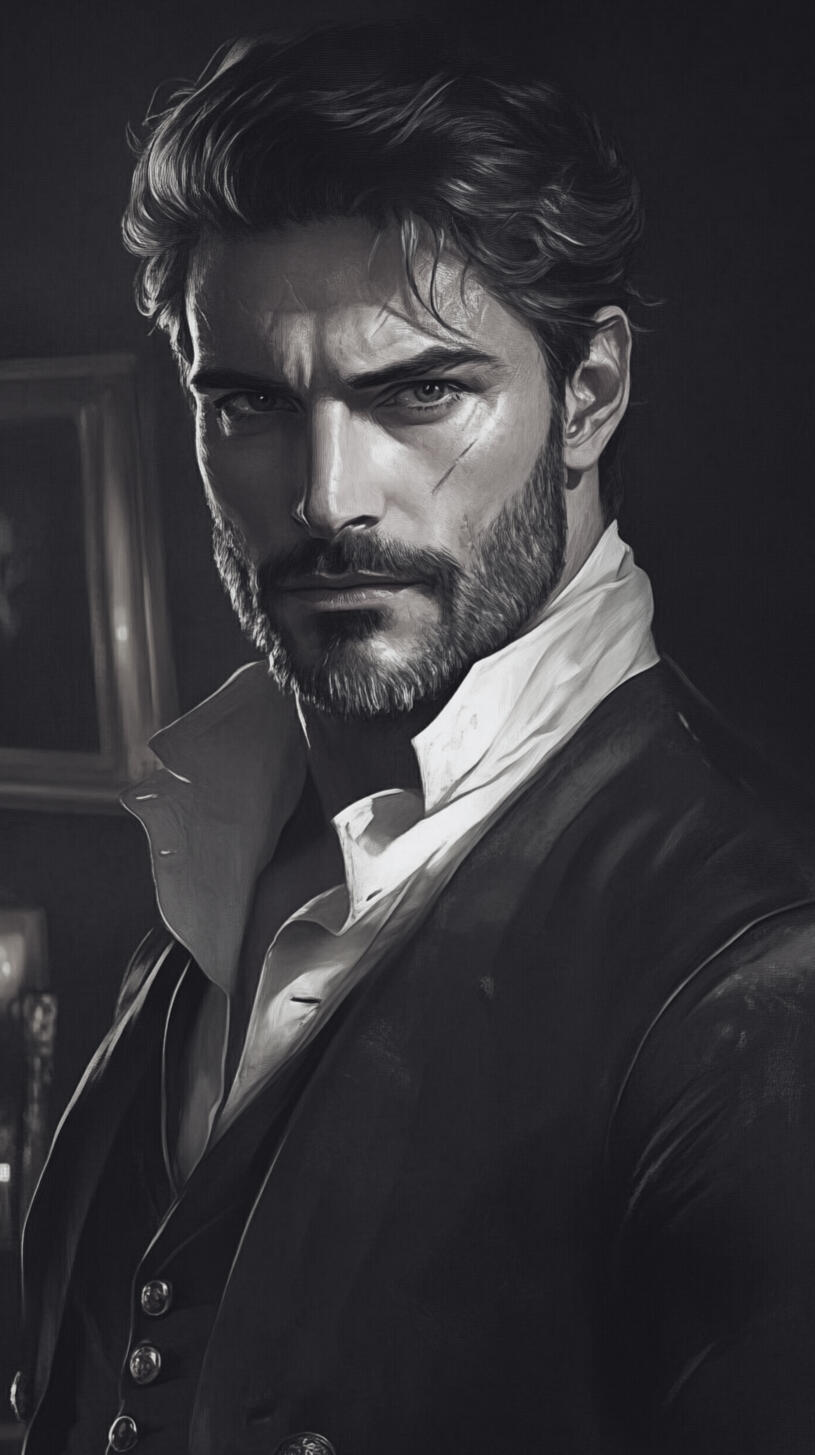
the director.
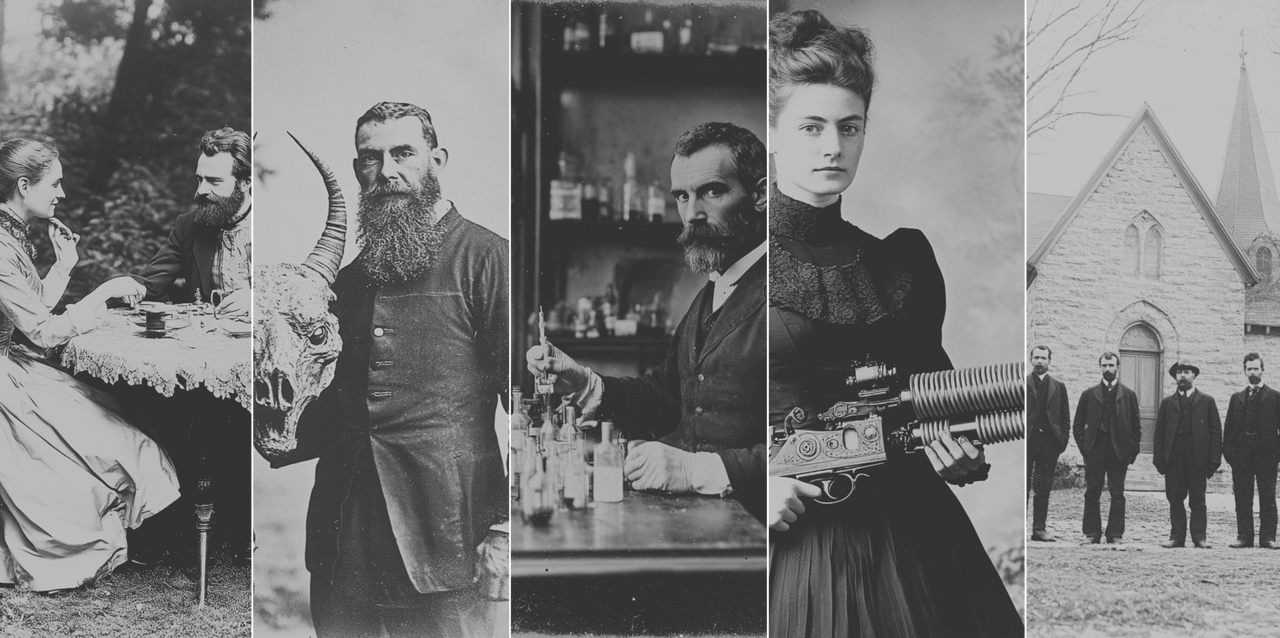
At the helm of A.E.T.H.E.R. stands Lord Gideon Whitmore, a man whose relentless pursuit of the supernatural has shaped the organization into the formidable force it is today. Both a brilliant tactician and a master investigator, his obsession with eradicating unnatural threats knows no limits—a quality that has earned him both unwavering loyalty and silent fear.Born into one of England’s oldest and most revered noble families, the Whitmores were not men of mysticism or myth, but of steel, intellect, and cold efficiency—industrialists, generals, and political architects who shaped the Empire with shrewd business dealings and unwavering service to the Crown.His father, Lord Alistair Whitmore, was the embodiment of calculated ambition, a man who measured a person's worth by their discipline, cunning, and strategic value. His mother, Lady Eleanor Whitmore, had been raised among aristocracy, her charm and diplomacy hiding a core of ruthless pragmatism. Their world was one of order and duty, with no patience for fantasy, folklore, or the superstitions of lesser men.Gideon was never meant to inherit power. As the second son, he was expected to be a tool for the family's ambitions, nothing more. His older brother, Edwin, was the golden heir—charming, admired, and effortlessly charismatic, the kind of man their father could shape into a true Whitmore. Meanwhile, Gideon was the quiet one—the watcher, the strategist, the child who excelled in mathematics, military history, and fencing but lacked the outward brilliance that earned his father’s approval.Then came Evelyn.She was born when Gideon was already well into his teens, a child of wild curls and bright laughter, untouched by the family's cold ambition. She was the only person who could pull warmth from him, the only one who made the gray halls of Whitmore Manor feel less like a monument to power and more like a home, until the night she vanished.It was the last golden evening of autumn, the scent of damp earth curling through the garden air. Evelyn had been playing among the hedgerows and ivy-wrapped stone walls, beneath the watchful eyes of footmen and locked gates meant to keep danger at bay. Yet—in the span of a breath, she was gone. No forced entry. No struggle. No trace. Only a single burned sigil seared into the stone path—elegant, intricate, and utterly unrecognizable.The search lasted weeks, then months, then years.His father called it a tragedy to be moved past. His mother’s grief hardened into silence. His brother, ever the dutiful heir, buried himself in family affairs but Gideon refused to accept it. A girl does not simply vanish.For the first time in his life, Gideon stared into something he could not rationalize—and instead of looking away, he stepped into the abyss. He abandoned titles, inheritance, the world of men. He sought the strange, the hidden, the impossible. He scoured forbidden libraries, bribed occultists, interrogated mystics. He walked streets where men feared to tread, hunted answers in places where the laws of physics held no dominion. Eventually, his search led him to A.E.T.H.E.R.At first, he was an outsider, another nobleman seeking answers in a world that had none to give. Then, he became an operative—a man willing to go where others hesitated, where others whispered of horrors, where others refused to tread. He fought alongside men and monsters alike, forged unlikely alliances, and bent the rules of war in ways that would have made his father weep. By forty, he was Director.He built A.E.T.H.E.R. into an army that even the supernatural world feared. He shaped its laws, sharpened its weapons, and made its presence inescapable. Despite his accomplishments, he never stopped searching for Evelyn. He knows she's still out there and if there is even the slightest chance of bringing her home, he will tear the very fabric of reality apart to do it.
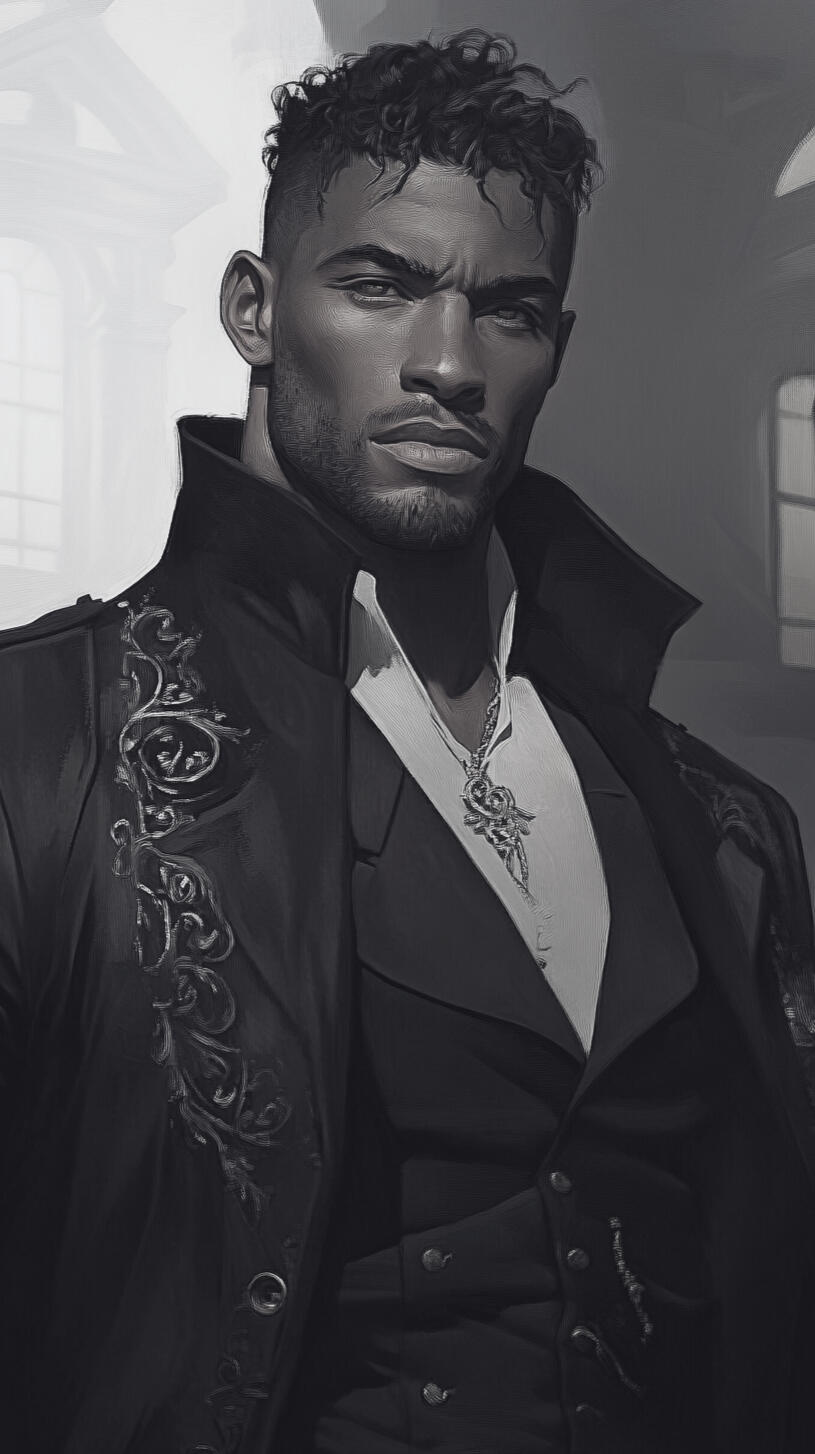
the commander.
Among A.E.T.H.E.R.'s most formidable operatives stands Captain Malachai Montgomery, commander of the Blackwatch and the organization’s foremost expert on lycanthropes and cryptids. A warrior first and foremost, he is blunt, disciplined, and unrelenting, though even he cannot fully silence the beast that lurks beneath his skin.Malachai was born in 1835, in the slums of New Orleans, a city where fortunes were made and lives were discarded with equal ease. His mother, Ada Montgomery, was a freed woman, sharp-witted and iron-willed, a healer who knew the secrets of roots, poultices, and whispered prayers. She mended the sick, the wounded, the desperate—no matter the coin in their pockets.His father was a ghost, a shadow, a name never spoken and Malachai might have lived his whole life in ignorance, had he not felt the hunger awaken beneath his skin.It came in his twelfth year, in the thick of a humid Louisiana summer, where the air smelled of rain and the slow rot of the bayou. A fever took him—burning from the inside out, twisting his muscles like wire, sharpening his senses to unbearable clarity.When he awoke, the world was red. His mother stood over him, fear stark in her dark eyes. That was the moment he learned the truth.His father had not been a man at all.He was a werewolf, a creature of the hunt, a monster that had passed its curse into his blood and left him to fend for himself. From that night on, Malachai was something else. Something hungry, primal, inescapable. And with that realization came another—he would never be just human again.For a time, Malachai lived on the outskirts of society, struggling to control what he had become. He left New Orleans, traveling through the dense forests of Georgia, the mist-choked mountains of Tennessee, searching for others like him. He found them deep in the Virginia backwoods—a pack of werewolves who lived without chains, without shame, without fear.They welcomed him as kin, as one of their own and he believed he had finally found his place.They taught him the old ways—the thrill of the hunt, the sharp joy of running under the moon, the unspoken bond of those who shared his curse but they were also cruel. They saw humans as prey, their laws built not on honor, but on strength alone. If you were weak, you were nothing. If you hesitated, you were dead.Malachai could not abide by it.His mother had bled for her freedom, had taught him that strength was not in domination, but in endurance. He had been given a choice—to be more than the beast inside him.The pack had no such choice. They were nothing but hunger, nothing but instinct. And Malachai was not a man who could live like that.The night he left, they let him go—but not without a cost. His closest friend in the pack, Jonas, called him a traitor. Challenged him for his betrayal. Malachai won—but the scars of that fight never left him.From then on, he was alone again.For the next decade, Malachai walked the line between man and beast, soldier and hunter, mercenary and monster.He fought in the Crimean War, the Indian Rebellion—anywhere there was blood to be spilled and chaos to be tamed. He learned to control his beast, to sharpen his instincts into something useful rather than destructive. He became a tracker, a killer of things worse than him. And then, A.E.T.H.E.R. found him.They had been watching him for some time—curious about the werewolf who refused to be a monster. They made him an offer.Fight for something greater or keep running until there was nowhere left to go.Malachai chose to fight.Now, he is Commander of the Guard, the first of his kind to hold rank within A.E.T.H.E.R.'s elite forces.He is the blade in the dark, the one who hunts the things that think themselves hunters but he is still haunted.By his past.
By the ghosts of those he left behind.
By the father he never knew.But for now, he has found a purpose and for now, that is enough.
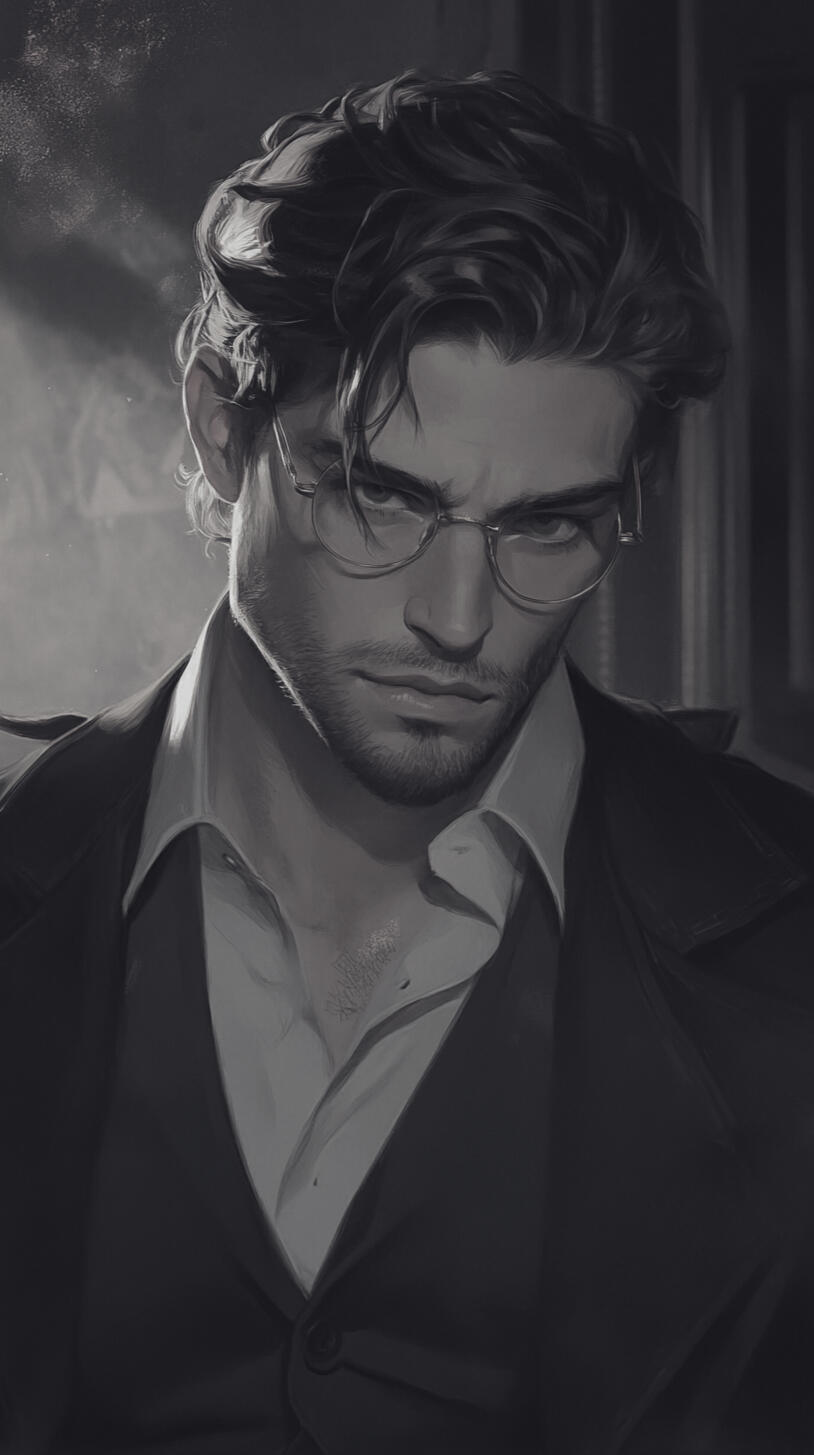
the artificer.
Providing A.E.T.H.E.R. with its mechanized arsenal and arcane technology, Dr. Percival "Percy" Hargrave is both its greatest asset and its most volatile liability. Once one of the most brilliant minds of the Steam Surge, his obsession with enhancing the human mind led to his downfall, fracturing his psyche into two distinct personalities.There is Percy—pragmatic, meticulous, methodical. And then there is Dorian—reckless, sadistic, utterly unbound by morality.Hargrave’s inventions, from pneumatic exorcism gauntlets to steam-powered spectral disruptors, are indispensable in A.E.T.H.E.R.'s war against the supernatural. But his madness is barely kept in check, and the organization tolerates his volatility for one simple reason: without him, they would be woefully unequipped for the war they fight.Percival Hargrave was born in 1841, the only son of Theodore and Margaret Hargrave, a family of renowned industrial magnates. His father built a fortune in steam-powered engineering, while his mother was an alchemist of no small repute, one of the rare women in London’s cloistered scientific circles.From the moment he could walk, Percival was surrounded by the hum of machinery, the scent of burning coal, the flickering glow of half-finished blueprints. He was a child of impossible intelligence, dissecting clocks and firearms before he could read, crafting rudimentary automatons by the time he was ten. By fifteen, he was published in The Royal Society’s Journal of Mechanized Engineering, hailed as a visionary. By nineteen, he was building prototypes for the Crown, crafting inventions that fused alchemy with steam-powered technology.But genius, left unchecked, can become its own madness.Percival was never satisfied. There was always more to learn, more to discover, more to break open and reconstruct into something beyond.By twenty-five, he became obsessed with one question:"What if the human mind could be enhanced? Perfected? Elevated beyond mortal limitation?"He theorized that the brain was merely a machine—one that could be rewired, strengthened, and improved. Using a blend of alchemy, galvanism, and esoteric mathematics, he devised a method of electrical infusion directly into the cerebral cortex. A way to increase memory, intelligence, even physical capability.The night he conducted the first trial, he had no assistant, no witness—only the steady ticking of the brass clockwork devices around him. He connected the electrodes to his own skull, activated the machine, and let the current surge through him.At first, there was only light. A searing, all-consuming radiance behind his eyes. His thoughts fractured and reformed in rapid succession, knowledge unfolding at impossible speed. And then...pain.His nerves burned, his mind cracked, and something else slipped through the fissure. When he awoke hours later, he was not alone in his own body.
It started as a whisper. A soft, distant echo in his mind. But over time, it became stronger, bolder, crueler. It spoke in his voice, but it was not his own. It was calm where he was frantic, reckless where he was cautious, and hungry for knowledge that no man should seek.Its name was Dorian.He did not know where he had heard it. Only that it was always there, waiting. At first, he thought he could control it. But as the months passed, the changes became physical.When Dorian took over, Percival’s posture shifted, his grin curled wider, his voice became silkier, laced with something dangerous. His eyes darkened, his pulse slowed, his presence turning from brilliant scientist to something coldly, beautifully monstrous.Where Percival sought innovation, Dorian sought dominion. Percival didn't realize how dangerous Dorian was until the night he assumed full control.It began on a fog-drenched London street, the gas lamps flickering like phantom eyes in the mist.Sir Reginald Pembroke, a wealthy A.E.T.H.E.R. benefactor, was returning home from one of his many discreet meetings. He was a financier, not a soldier, a man who funded supernatural warfare but never participated in it which meant that when he turned down a quiet side street, he did not see the danger lurking in the shadows. Or, more accurately, he did not see the soft-spoken scientist who politely asked him for directions before everything went black.When Sir Reginald awoke, it was not in his finely furnished home, but in the dark, cluttered basement laboratory of Dr. Percival Hargrave. The room smelled of oil, copper, and something sickly sweet—like ozone before a lightning strike. Strange brass-and-steel machinery lined the walls, flickering with erratic bursts of energy, illuminating half-finished automata, glass jars of preserved organs, and half-sketched equations scrawled along wooden beams in frantic, near-inhuman handwriting. And standing over him was not Percival Hargrave.What happened over the next two days was never fully documented. By the time A.E.T.H.E.R. found Sir Reginald, his body was barely functioning, his mind shattered beyond repair. When they stormed Percival’s estate, they found him on brink of a panic attack, alone in his study, trembling, barely able to breathe. He had no memory of what had happened. No recollection of taking the man, of the things he had done, of the fact that there was still blood beneath his fingernails.A.E.T.H.E.R. should have killed him but Gideon Whitmore had other plans.The interrogation was short, quiet, and decisive. Gideon didn’t waste time with accusations or threats.He simply watched as Percival sat, hunched over, fingers trembling, his breath coming in short, shallow gasps. Gideon saw the truth.The man before him was not a murderer. He was terrified of what he had done. And for reasons Gideon could not entirely explain, he made a decision: he offered Percival a choice.A sentence to the gallows, or a place within A.E.T.H.E.R. under strict supervision.Percival chose the latter.Now, bound to A.E.T.H.E.R. indefinitely, his actions monitored, his mind under constant strain, he struggles to remain himself.
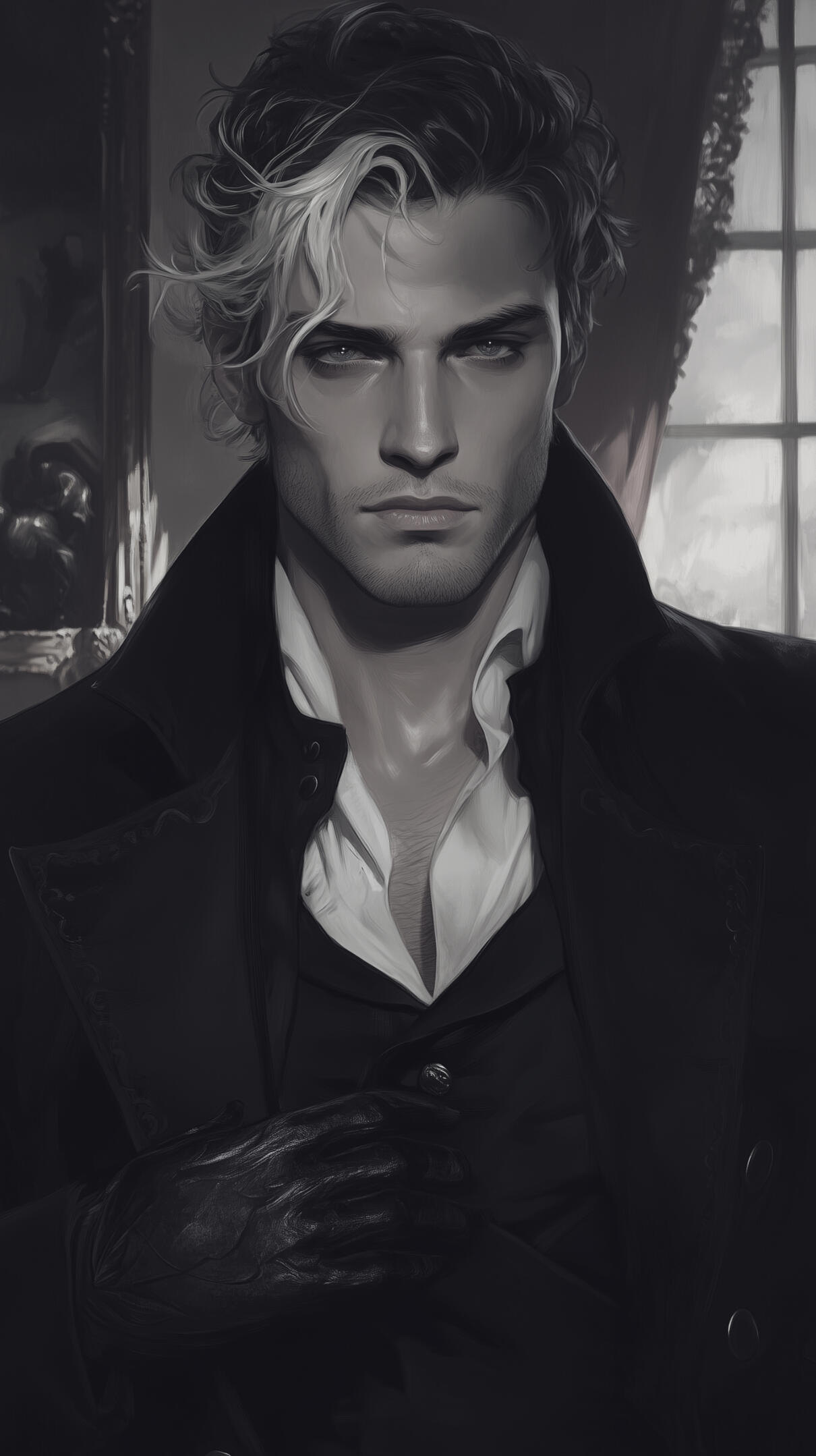
the diplomat.
Gaspard Vaudrieu was born in 1754 on the streets of Bordeaux, France, the unwanted son of a woman whose name he never knew and a father who never cared to claim him. From the moment he could walk, he was running—scheming, charming, lying, surviving.The world never gave him anything, so he learned to take what he could. He was beautiful, clever, and ruthlessly ambitious, a man who could talk his way into dining with nobles and slip out the back door with their silver. Had he been disciplined, had he tempered his vices, he might have built an empire of wealth and power. He had the mind for it. But Gaspard had one fatal flaw—he loved excess.Wine. Women. Men. Gambling. Pleasure.He lived like a man who knew he was going to die young and in the winter of 1780, he very nearly did.That night, Montmartre had been generous.Wine, silk, perfume—all the sins Paris had to offer. Gaspard indulged in them all, drowning in excess before staggering drunkenly into the cold, damp streets. He was distracted, unaware that two men had been watching him from the shadows.The knife slid into his gut before he even registered the pain.His attackers—nothing more than common muggers—took what little coin he had left and left him bleeding in the filth of an alleyway, dying for nothing. By morning, he would have been another frozen corpse in the gutter. Forgotten. Unclaimed. But someone else found him first.Élodie.A prostitute. A woman he barely remembered, but one who had clung to every word he’d ever said, who had let herself believe the pretty lies he whispered between kisses.So, kneeling in the filth beside him, she bit into her own wrist and pressed it to his lips in an effort to save him. He was too far gone to resist. And as the last breath of his mortal life faded, something else awoke inside him.Becoming a vampire did not humble Gaspard but it did give him clarity. He had wasted his first life on pleasure and indulgence. This time, he would build something that lasted.He learned the rules of vampiric society quickly—who to bribe, who to manipulate, who to kill. Within decades, he forged alliances, cultivated power, and built a House that rivaled even the oldest bloodlines. House Vaudrieu became a haven for the cunning, the ambitious, the restless. He welcomed strays, rogues, outcasts—anyone with a sharp mind and a willingness to serve.It worked too well.The other Houses—ancient, bloated, and slow-moving—resented him. They had spent centuries preserving their power and here was a bastard-turned-vampire who had, in just a few short lifetimes, built something greater than any of them...so they plotted, they schemed, and when the time was right—they struck.The vampiric civil war that erupted in 1845 was never recorded in mortal history books, but in the shadowed corners of Paris, blood ran thicker than wine.For all his cunning, Gaspard did not see the knife until it was already in his back. The betrayal came from his most trusted advisor—a man he had pulled from the gutter and made into his right hand. The other Houses moved against him in force, and the streets that had once been his playground became his graveyard.House Vaudrieu fell in a single night.Those who did not flee were slaughtered, their bodies burned, their names erased from the records. Gaspard, barely clinging to his undead life, gathered what few loyal followers remained and escaped to England.By the time Gaspard Vaudrieu arrived in London in 1850, the city’s immortal underworld was in chaos. Blood ran freely in the streets—not just from vampires, but from all who had dared to carve out power in the shadows.Vampires, long used to ruling from behind the curtain, were losing ground. The world was changing, and with it, so were the creatures that stalked the night. Werewolves grew bolder, their packs expanding and encroaching on vampire-held districts. The Fae tightened their grip, weaving unseen deals that turned influential mortals against their undead counterparts. And rogue warlocks—unpredictable, dangerous, and hungry for dominion—were upsetting the fragile balance that had allowed London’s supernatural factions to coexist in uneasy silence.The great Houses of London, once proud and ancient, were too busy feuding with one another to recognize the true danger. While they schemed, the world around them moved forward without them, leaving them fractured and vulnerable. Gaspard, still reeling from the betrayal that cost him his own House in France, saw London’s crumbling vampire society for what it was—an opportunity.It took him years, but he did what no other vampire had managed to do—he united them. Not through threats or brute force, though he was no stranger to eliminating obstacles, but through strategy. He showed them that their enemies were not each other—they were everything else.The werewolves had packs. The warlocks had covens. The fae had courts. So why, then, were vampires tearing each other apart rather than acting as one?By 1858, London’s vampire Houses were stronger than they had been in centuries, no longer just predators lurking in alleys, but an empire in the making. Gaspard had done the impossible but there was still one problem.A.E.T.H.E.R.For decades, A.E.T.H.E.R. had been a persistent and lethal thorn in the side of vampire society. Any vampire who stepped out of line, no matter how high their status, found themselves hunted, executed, and erased from history.The newly unified Houses of London wanted revenge. The younger vampires, fueled by their newfound strength, clamored for war. Gaspard, ever the pragmatist, thought that was foolish.He knew war with A.E.T.H.E.R. would end in mutual destruction. The agency was too well-equipped, too resourceful, too unshakable in its mission to eradicate anything deemed a threat. So he proposed something that had never been considered before.What if, instead of fighting A.E.T.H.E.R., they helped them?The other Houses laughed. Why would they ever aid their greatest enemy? What benefit could they possibly gain from cooperation? But Gaspard, as always, had an answer.Vampires had access to London’s hidden corners—places that even A.E.T.H.E.R.'s finest spies could not reach. They had resources, intelligence networks, informants embedded in places humans could never infiltrate. If they shared that knowledge—if they offered their aid in controlling supernatural threats—they would make themselves too valuable to destroy and to A.E.T.H.E.R., the offer was as unexpected as it was compelling.So in 1860, the Crimson Concord was signed.It was not a peace treaty but an agreement of survival.In exchange for their cooperation, vampires were allowed to exist under A.E.T.H.E.R.’s watchful eye. There would be no more purges, no more indiscriminate executions. Vampires would be monitored, regulated, and kept in line—but not exterminated.Some within A.E.T.H.E.R. opposed the idea entirely, calling it madness to put any trust in creatures of the night but Gideon Whitmore saw the advantage of controlling an enemy rather than destroying them outright.Gaspard had done what no vampire had done before. He had won vampires a place in the new world and he had done it without spilling a drop of blood.
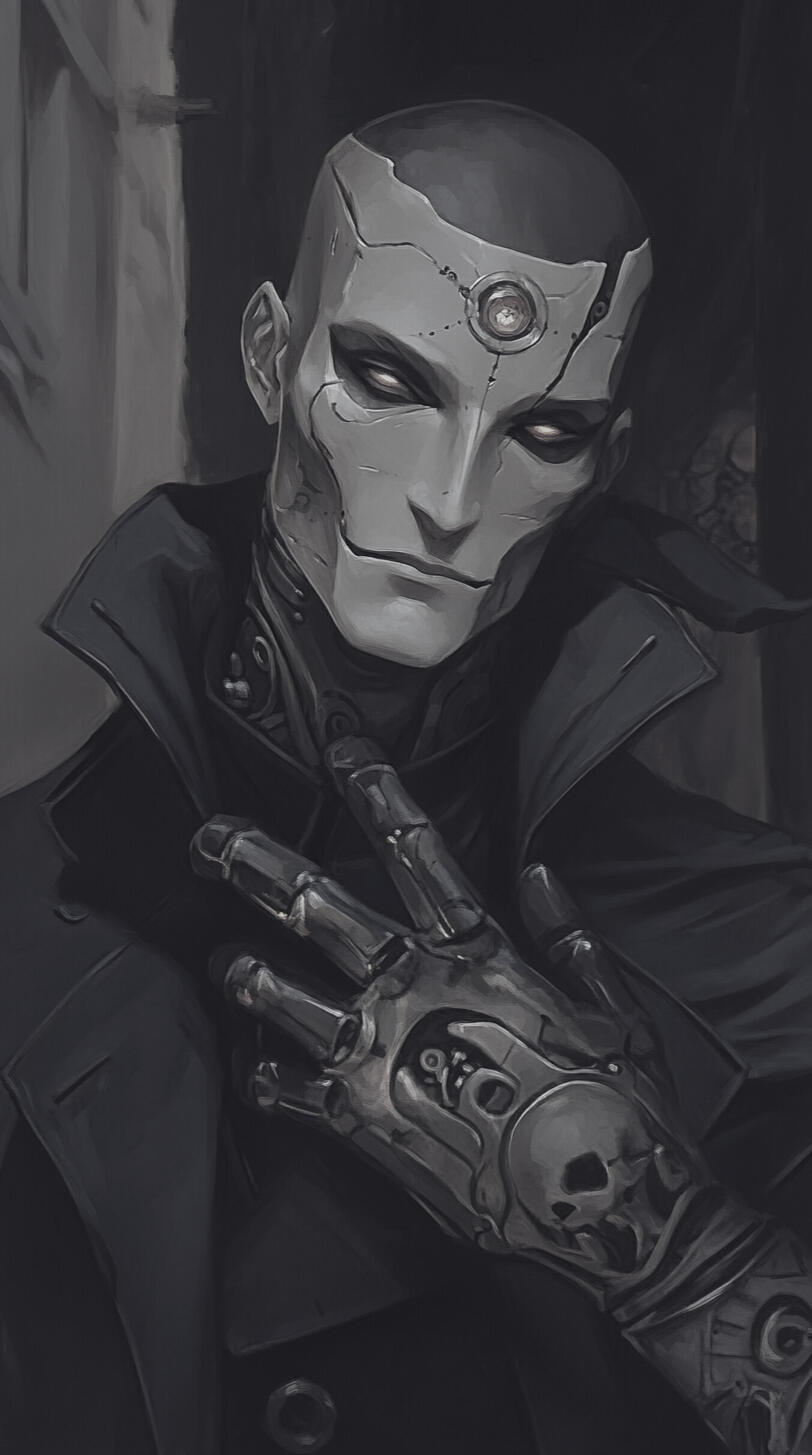
the war machine.
Before he became Solomon Vance, before he was iron and brass, porcelain and gears, he was a man of flesh and blood, bone and sinew. A naval captain—a soldier of the Empire, a man who had spent his life adrift on the sea, following orders, fighting battles in the name of a Queen he had never met.His past is fragmented, lost in the process that turned him into something more—and something less—than human.
But he does remember the crash of cannon fire, the sting of salt spray on his skin, the way the deck tilted beneath his boots as war swallowed the horizon. He was a man of duty, of discipline, of unwavering resolve. A man who believed in protecting those who could not protect themselves and then, suddenly, he was dying.
The details are lost to him, blurred between memory and oblivion. A battle gone wrong, a betrayal, a fire consuming the world around him but it was not a simple skirmish, not a mere act of war. There was something else that night...something in the water.It began with the unnatural stillness, the eerie quiet that came before the storm. The sea should have been churning, but instead, it was unnaturally smooth, black as ink, as if waiting. Then, fog. Thick, cloying, impenetrable. It swallowed the ship, muffling sound, suffocating the air itself. The crew spoke in hushed, uneasy tones, their voices swallowed too quickly by the mist and it wasn't long until the whispers began. They came from nowhere and everywhere, voices speaking in tongues that no man should know, words that slithered like serpents beneath the skin.That was when the shadows moved, when the ocean itself opened its maw...and then—nothing.Solomon does not remember what rose from the deep, only that it did not belong to this world. He remembers the screams, the madness, the way the sky cracked open and bled. He remembers fire—searing, merciless, endless, and then, darkness.He should have died, would have died had it not been for Percival Hargrave.The artificer had been investigating strange readings in the ocean, leading a team of A.E.T.H.E.R. operatives the location where the readings were the most active.They stumbled upon a wrecked ship, half-consumed, as if something had chewed through wood and steel alike. The bodies—what little remained of them—were twisted, distorted, their features unrecognizable and then, amid the carnage, they found him. Barely alive. Unrecognizable as human. He had been mangled beyond repair, burned down to something unthinkable. And yet, against all logic, he was still breathing.Percival was not a merciful man nor was he a savior. He was simply...resourceful.He did not pull Solomon from the brink of death out of kindness, he did it because he needed a soul. He'd been working on something—a project that blended alchemy, clockwork, and steam-powered augmentation. A way to preserve a human mind in something beyond the limitations of flesh and when he found the dying naval captain, he saw an opportunity.
The process was agony—a soul tethered to a body that was no longer its own, a mind stripped of its memories, placed into a vessel of steel and porcelain. When he awoke, he was not the man he had been but something more.Solomon was never intended to be a soldier. He was meant to be a gift, a perfect bodyguard, a tireless sentinel, a guardian of iron and brass.Percival crafted him for Gideon Whitmore, a protector to shield him from threats no mortal man could withstand and for a time, that was his role but Gideon, ever the strategist, saw something greater in him.Solomon was deadly with a blade, an absolute sharpshooter, a warrior with inhuman reflexes and the strength of two werewolves combined and more than that—he could think.To keep him as a glorified shield would be a waste. So, Gideon sent him into the field.Where normal men would burn, Solomon was immune to fire. Where they would falter, Solomon pressed forward without hesitation. Where they would die, Solomon endured...and so, the first and only living construct of A.E.T.H.E.R. became one of its most feared and respected operatives.Solomon does not remember who he was. Not fully. There are fragments—flashes of memory like old, faded photographs.The scent of saltwater.
The feel of a sword in his hand.
The echo of a woman’s voice whispering his name.But the past is a ghost he cannot touch, a story written in a book that no longer belongs to him.
He is not bitter, however, because he was given a second chance. A chance to fight for something greater than himself. A chance to protect those who cannot protect themselves. A chance to be more than just a machine.So he fights—not for revenge, not out of duty to a Queen or an Empire, but because he has the power to stop the horrors that stalk the night.And as long as he still draws breath—however artificial it may be—he will not let that power go to waste.
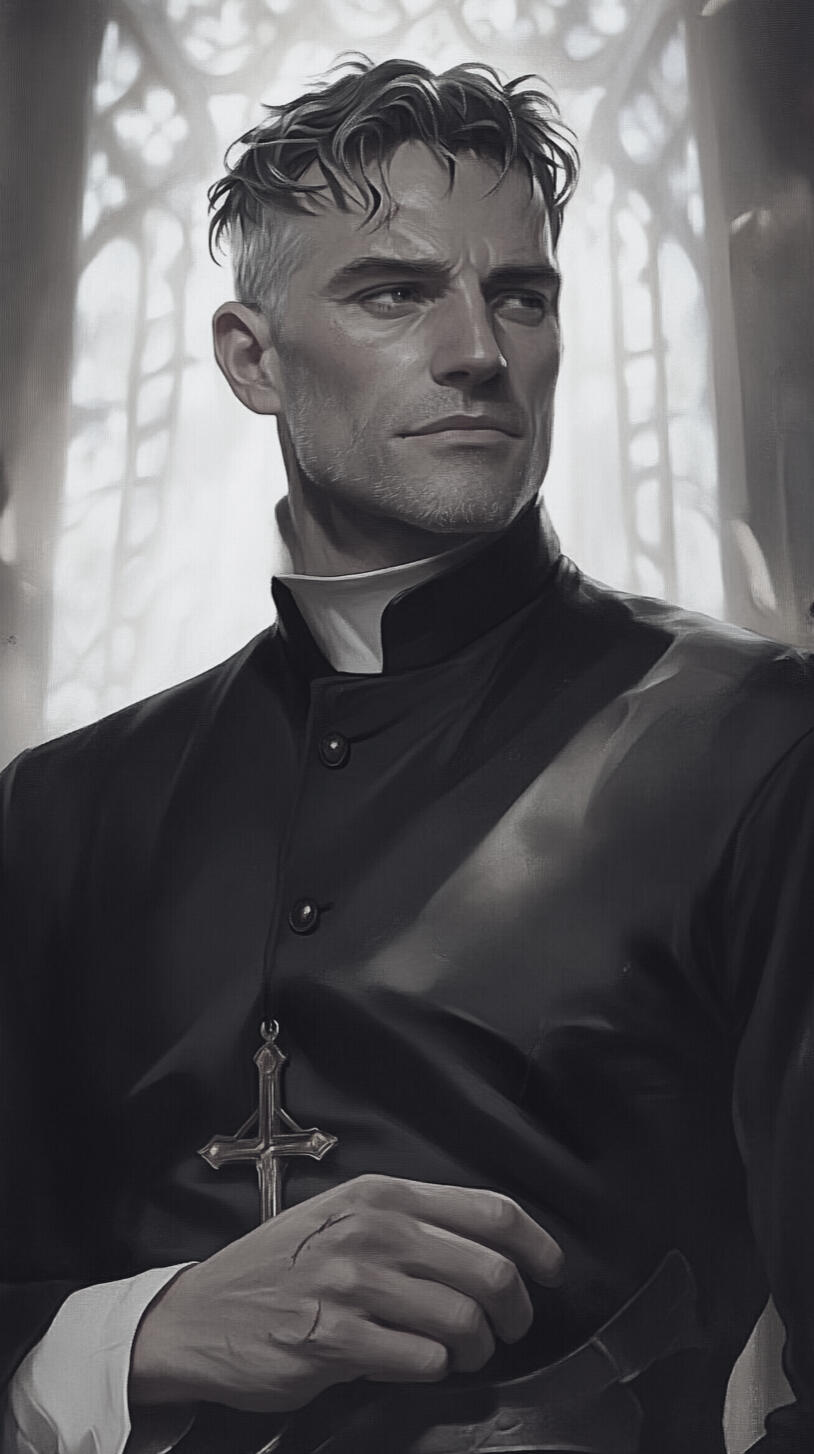
the guardian.
There was a time when Benedict Hale did not have a name.In the heavens, he was one among many, a celestial being with no need for identity, no need for earthly attachments. He was a watcher, a guardian of divine law, tasked with observing the mortal world, ensuring balance, keeping his hands clean of intervention but Benedict had never been like the others.He watched humanity with fascination, not detachment. He saw their struggles, their pain, their fleeting joys—and unlike his brethren, he felt something dangerously close to empathy. So, when he witnessed a city drowning in darkness, demons slipping through the cracks of reality to prey upon the weak, he did what no angel was meant to do, he intervened.The moment he drew his blade against a creature of Hell, he sealed his fate. His brethren did not come to his aid. They did not praise his mercy or his courage. No, instead, they cast him down.His wings, once a radiant testament to his place in the celestial order, were ripped from him, the remnants left as tattered scars upon his back, moments before he plummeted to Earth.He landed in London, 1824—a city of fog, filth, and suffering.For the first time, he felt cold. Hunger. Exhaustion. He bled, and the pain was sharp, immediate, and real, but more than that, he saw horrors unlike anything he had ever witnessed from above.Demons roamed unchecked, feeding on the weak, bending mortal wills, twisting souls into monstrous things. The city stank of sulfur and suffering, and he knew that if Heaven would not intervene, then he would. He became a hunter, wielding nothing but faith and fury, striking down the creatures that had once crept beneath his notice.He did not sleep, did not stop, did not question the sheer brutality of his new existence, at least, not until the night he almost died.The battle had been long, bloody, and brutal. The demon had been stronger than the others, a creature that should have taken three angels to bring down.By the time he drove his blade through the demon’s heart, his own body was broken, his vision blurred, his breath shallow. He staggered through the empty streets of London, his own blood warming the chill of the night. That was when he saw the church.St. Oswald’s.He stumbled inside, collapsing against the altar, thinking he would die there, among the only holy ground he had left, but then, a voice spoke."You are not what you appear to be."Father Elias Thatcher, an aging priest with wise, knowing eyes, stood over him. He had seen many things in his lifetime—but never something like Benedict.He took him in and nursed Benedict back to health, asked no questions he did not wish to answer, and gave him something he had not known he needed—a place to belong.Elias was a good man, but an old one. As the years passed, his hands grew weaker, his voice softer, his body frailer. And so, Benedict took up his mantle. By day, he became a preacher, guiding lost souls, offering sanctuary to those who had nowhere else to turn. He learned what it meant to be human—not just to fight, but to heal, to listen, to understand. By night, he became a warrior once more. He hunted in the dark corners of the city, ridding it of the creatures that preyed on its people. He did not know that he was not the only one waging that war.Not until he met Gideon Whitmore.It was a cold London night when Benedict and Gideon crossed paths.Both had been tracking the same demon, moving through the city’s forgotten alleyways, searching for the scent of sulfur, the flicker of hellfire. When they cornered the beast, there was no hesitation, no question of who fought on which side.They fought together, side by side, until the creature was dead at their feet and then, they turned to face each other and demand answers.Benedict had not realized there were humans fighting this war. Gideon had not expected a fallen angel to be standing among the damned. Intrigued, they spoke—not as warriors, but as two men who had sacrificed everything for the same cause. A.E.T.H.E.R. was not divine, but it was powerful. It was an organization of people who refused to be powerless, who stood against the darkness even when Heaven turned its back and Benedict admired that.He offered his aid, not as a commander, not as a soldier, but as a guardian of sacred ground. He opened St. Oswald’s to them, allowing them to use it as a base of operations, a refuge, a place where no uninvited creature could cross because he had woven the land with enchantments, with old sigils of divine power.This was holy ground and if A.E.T.H.E.R. would stand against the darkness, then he would stand with them and as he looks upon the men and women of A.E.T.H.E.R.—those who fight despite having no wings, no divinity, nothing but their own mortal will—he understands that perhaps, in the end, this was always where he was meant to be.